

Understanding Dropout Trajectories and Resilience Factors among Adolescent Girls in Jharkhand: An Evaluation of Aangan India’s School and Safety Model
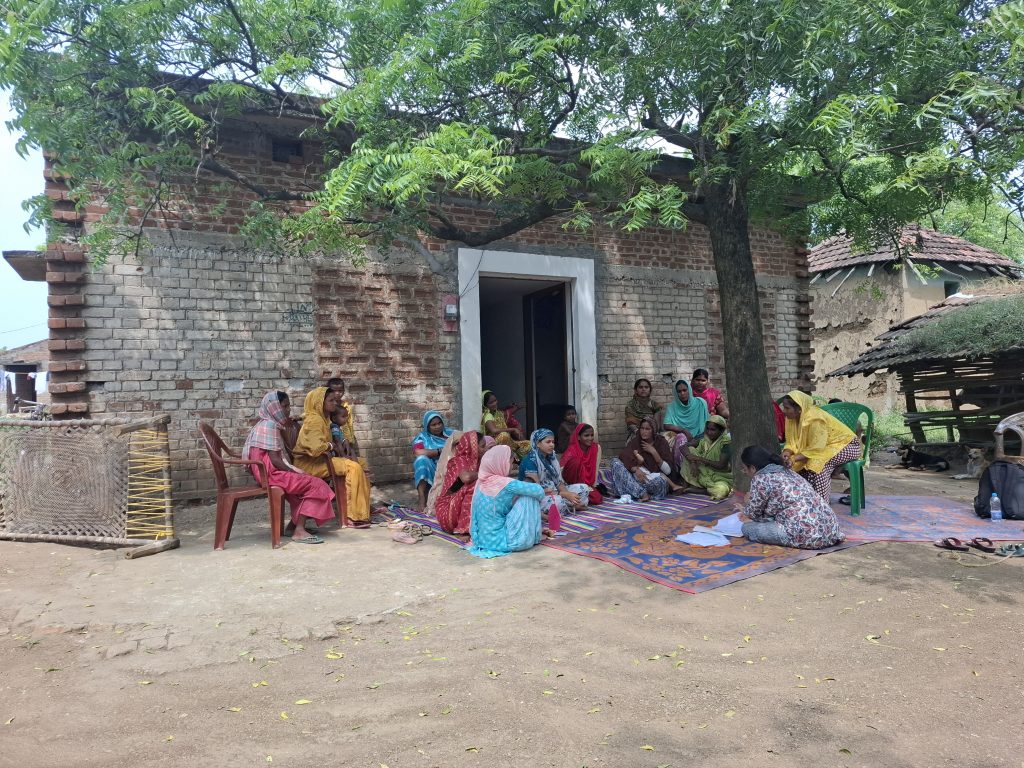
Jharkhand continues to record high dropout rates among adolescent girls despite efforts by the state government and civil society organisations. This is largely due to multiple factors such as high prevalence of poverty, migration, child marriage, burden of unpaid care work, and more. To address this issue, Aangan Trust, a Delhi-based organisation, with their primary […]
Community Education on Gender and Diversity in Karnataka Public Libraries

The purpose of this action-research project is to develop an empowerment-based mentorship model for adolescent boys and girls, with an emphasis on developing their critical thinking skills.
Strengthening Decentralised Educational Planning through STARS
The project aimed to strengthen decentralised education planning and management across six states that are part of the World Bank’s STARS (Strengthening Teaching-Learning and Results for States) initiative.
Building Resilient School Systems for Comprehensive Response to Education in Emergencies
This toolkit is aimed at helping the process of making a school more resilient and responsive. Although aimed at better preparedness for education in emergencies, it has been prepared with the basic premise that only if a school or school-system is resilient in its functioning during ‘normal’ times will it become capable of responding quickly […]
Holistic Skills for Early Childhood Education in India

With the acceptance of National Education Policy (NEP) 2020 and subsequent developments such as National Initiative for Proficiency in Reading with Understanding and Numeracy (Nipun Bharat) by the Government of India, the country has redefined the early years for education as covering children between 3–5-year-olds to 3-8year-olds, which is close to a widely acceptable definition […]
Evaluation of Thousand Schools Programme

This study evaluated phase 1 of the Thousand School Programme, focusing on its design, implementation, and impact on education and community adoption.
Scoping Study: Curriculum, Learning, and Assessment of Foundational Learning in India
With the acceptance of National Education Policy (NEP) 2020 and subsequent developments such as National Initiative for Proficiency in Reading with Understanding and Numeracy (NIPUN BHARAT) by the Government of India, the country has redefined the early years for education as covering children between 3–5 year-olds to 3-8 year-olds, which is close to a widely […]
Protecting and Enhancing Early Childhood Development (ECD) during Covid-19 Crisis in Kerala, Uttar Pradesh and Gujarat
The project aims to create an ideal ECD model using a quality framework, estimate costs and investment shortfalls, and provide detailed reports to guide optimal resource allocation for ECD services in India.
Scoping Study: Curriculum, Learning, and Assessment of Foundational Learning in India to Provide a Road Map to Incorporate Holistic Skill Development
This project examines the concept of Foundational Literacy and Numeracy (FLN) in Maharashtra and Rajasthan. Following the conception of holistic development of children as envisaged in the NEP 2020, this project looks into the ‘what’ and ‘how’ of the breadth of skills required for holistic development, unlike the older conceptions, which were limited to literacy and numeracy. Six models of ECCE (Government and Non-government) in both rural and urban areas of Maharashtra and Rajasthan will be identified. The project aims to develop a deeper understanding of the pedagogy and delivery of ECD in those particular models.
Policy Brief: Public Expenditure on School Education and Quality of Educational Provisions in Assam Tea Garden Region Schools
The tea gardens of Assam are a vital component of the state’s geography and economy, employing approximately 1 million workers across 856 gardens and contributing significantly to the political landscape by electing 25-30 representatives to the 126-seat state assembly. The workforce, predominantly classified as tea tribes, constitutes about 20% of Assam’s total population. Despite their […]