

Institutional Study for Identifying Potential Pathways Towards Making a Child-friendly Gram Panchayat

The study analysed well-performing Gram Panchayats (GPs) and other institutions, such as Anganwadi Centres, VHSNC, SDMC, and Bal Vikas Samithi, at the GP level to evaluate their functioning in relation to statutory responsibilities across various divisions of Karnataka.
Mahila Samakhya: A Reflection
Mahila Samakhya (MS), established by the Government of India in 1987, was a pioneering women’s education and empowerment programme that redefined education as a vehicle for both literacy and empowerment. Unlike typical government initiatives, MS placed rural women’s needs at its core, aiming to cultivate critical thinking and understanding of societal structures rather than merely […]
Working Paper: Researchers as Policy Activists: An Experience-Based Framework for Responsive Policy Engagement
This paper is both an analytical and reflective piece on the process of public policy advocacy in global South contexts. It documents the author’s experience advocating with state governments in India to continue funding for the Mahila Samakhya women’s empowerment program. While reflecting on the dilemmas, processes and outcomes of this engagement, the author also […]
Public Expenditure on Health in Maharashtra – A critical analysis of size, sources, priorities, flow, processes and management
This study analysed Maharashtra’s health expenditure, focusing on Maternal and Child Health, fund-flow mechanisms, planning challenges, and Gram Panchayats’ role in health prioritisation.
An Analysis on Devolution of Funds to Panchayats Under 14th CFC and 4th SFC and Their Impact on Outcomes for Social Sector with Reference to Women and Children in Odisha
The study examines the impact of devolution through the Fourth State Finance Commission (FSFC) and the 14th Central Finance Commission (CFC) grants on social sectors, especially concerning women and children at the Gram Panchayat (GP) level. It investigates the implementation and monitoring mechanisms aimed at improving social outcomes using funds from FSFC and 14th CFC. […]
Working Paper: Uneasy tenants in the Master’s house: Reflections on Mahila Samakhya
The working paperUneasy tenants in the Master’s house: Reflections on Mahila Samakhya published in 2018 focuses on Mahila Samakhya’s growth and the possible circumstances that led to the downfall. The Mahila Samakhya (MS) programme, initiated in 1988 under the National Policy on Education, sought to empower marginalised rural women in India through education and collective […]
Together We Can: Assessing the Impact of Women’s Action Groups on Social Change in India
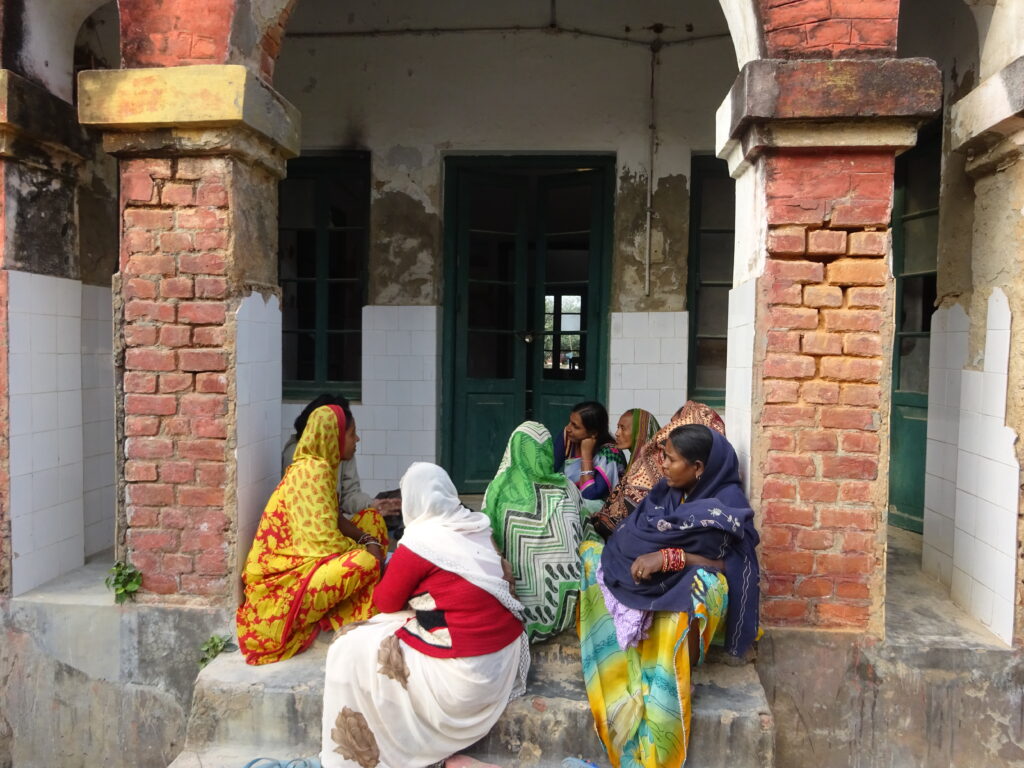
This project was a part of the Growth and Economic Opportunities for Women (GrOW), funded by IDRC. The aim of the project was two-fold: (i) To evaluate the impact of Mahila Samakhya (MS) programme on the economic empowerment of women, and (ii) To raise awareness and influence policies regarding collective action-based programmes among government functionaries, […]
Analysis on Devolution of Funds to Panchayats Under 14th CFC and 4th SFC and Their Impact on Outcomes for Social Sector with Reference to Women and Children in Odisha
A study by CBPS on the devolution of funds under the 14th CFC and FSFC. The study examines how the funds have been allocated as well as the presence of proper implementation and monitoring mechanisms.
Why it is important to retain an independent Mahila Samakhya Programme
The policy brief titled “Why it is important to retain an independent Mahila Samakhya Programme,” prepared by the Centre for Budget and Policy Studies in 2016, argues for the continuation of the Mahila Samakhya (MS) programme. Launched in 1989 under India’s Ministry of Human Resource Development, MS promotes women’s empowerment through education and collective action, […]
Policy Brief: Why it is important to retain an independent Mahila Samakhya Programme
The policy brief titled “Why it is important to retain an independent Mahila Samakhya Programme,” prepared by the Centre for Budget and Policy Studies in 2016, argues for the continuation of the Mahila Samakhya (MS) programme. Launched in 1989 under India’s Ministry of Human Resource Development, MS promotes women’s empowerment through education and collective action, […]