

Centering Children in the Development Debate in India: Public Action for Early, Fair, and Fitting Start

CBPS undertook a study in collaboration with Azim Premji University and the Centre for Studies in Social Sciences in the area of early childhood care and education (ECCE) to understand the social determinants of early childhood development, and the role of public and private institutions in fostering this.
Empowerment-based Mentoring Model for Adolescent Girls: Action Research in Bihar
The project aimed to demonstrate the impact of an empowerment-based mentoring model for adolescent girls that will develop leadership skills, allow them to develop critical thinking skills, examine and change their self-perceptions and aspirations, and enable actions related to themselves, their families and their communities.
Report 3: Research Studies on ECCE – Selected Non-ICDS ECCE Models: An Analysis of Features, Costs and Revenue
This section presents an analysis of various models of ECCE across the three states of Delhi, Odisha and Telangana, together with an analysis of their costs and revenues. The report is split into two sections: cost estimations and resource mobilisation. The first section presents a conceptual and analytical framework for a comprehensive analysis of the […]
Report 4: Research Studies on ECCE – Recommendations and Policy Directions for ECCE in India: Lessons Drawn From the Three Research Reports on ECCE
This report summarises the findings of the three research studies on ECCE undertaken: Status of ECCE: Provisions and Gaps in India, with special focus on three states (Delhi, Odisha and Telangana) Analysis of ICDS: Provisions and Budgets Analysis of the Costs and Resources of select non-ICDS ECCE models. Drawing on these studies, it provides […]
Report 2: Research Studies on ECCE – Integrated Child Development Scheme (ICDS): An Analysis of the National Budgets With Special Reference to Three States (Delhi, Odisha and Telangana)
This report presents an analysis of ICDS national and state budgets (for Delhi, Odisha and Telangana) for four years from 2014-15 to 2017-18. It analyses these budgets in relation to changes in financial planning in India, following the introduction of the Fourteenth Finance Commission, as well as in relation to the specific populations and additional/differential […]
Research Studies on ECCE: Guide to Use the Reports
It is globally acknowledged that the first six years of a child’s life are the most critical years for life-long development as during these early years, children develop their cognitive, physical, social and emotional skills that lay the foundation for life-long learning and holistic growth. Save the Children, with its implementation experience across India, believes […]
Working Paper: Uneasy tenants in the Master’s house: Reflections on Mahila Samakhya
The working paperUneasy tenants in the Master’s house: Reflections on Mahila Samakhya published in 2018 focuses on Mahila Samakhya’s growth and the possible circumstances that led to the downfall. The Mahila Samakhya (MS) programme, initiated in 1988 under the National Policy on Education, sought to empower marginalised rural women in India through education and collective […]
Together We Can: Assessing the Impact of Women’s Action Groups on Social Change in India
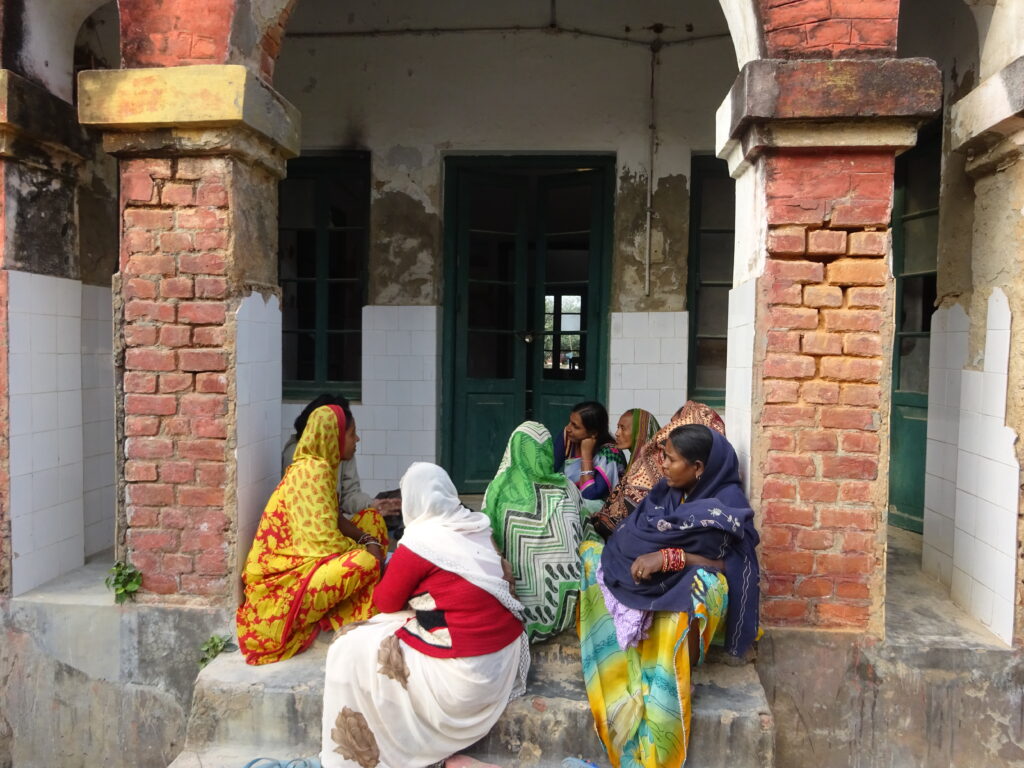
This project was a part of the Growth and Economic Opportunities for Women (GrOW), funded by IDRC. The aim of the project was two-fold: (i) To evaluate the impact of Mahila Samakhya (MS) programme on the economic empowerment of women, and (ii) To raise awareness and influence policies regarding collective action-based programmes among government functionaries, […]
Boys’ Underperformance in Education: Revisiting the Issue in the Commonwealth
Every child, regardless of gender, has the right to an education that offers not only academic learning but also training in the skills they will need to be successful in their particular environment. However, as recent statistics indicate, a significant percentage of children are still unable to access good quality education and so are denied […]
Examining the Contexts, Practices and Costs of Early Childhood Care and Education in India: Responsive Models for Child Development
A study by CBPS, in collaboration with the University of Cambridge on developing responsive models for Early Childhood Care and Education (ECCE) in India.